

Qingdao Lianhezhong Machinery Co., Ltd. specializes in the research and development, design and manufacture of tire molds, including various giant tire molds, bicycle tire molds, motorcycle tire molds, and automobile tire molds.
Rich experience
The company has 20 years of rich and professional experience in this field.
OEM/ODM service
We strictly control the quality in accordance with the brand's quality standards, deliver the molds after the production is completed and accepted, and provide mold installation and commissioning, training, repair and maintenance services. According to the tire specifications, performance requirements, tread patterns and other information provided by the customer, design tire molds that meet customer needs.
Quick response
We promise to respond to your inquiries within 24 hours to ensure that you receive the information and support you need in a timely manner.
Wide range of product applications
Bicycle tires, motorcycle tires, all-terrain vehicle tires, agricultural tires, truck tires, solid tires.
-
![Truck Tyre Mould]() Truck Tyre MouldTruck tyre moulds are an important part of heavy vehicles such as trucks, vans and buses, carrying a large amount of cargo and passengers. They are different from ordinary vehicle tire molds in
Truck Tyre MouldTruck tyre moulds are an important part of heavy vehicles such as trucks, vans and buses, carrying a large amount of cargo and passengers. They are different from ordinary vehicle tire molds in -
![Light Truck Tire Mold]() Light Truck Tire MoldThe light truck tire mold is the only part of the vehicle that contacts the ground, so the performance of the tire is related to the vehicle's handling and stability. For example, for a towing
Light Truck Tire MoldThe light truck tire mold is the only part of the vehicle that contacts the ground, so the performance of the tire is related to the vehicle's handling and stability. For example, for a towing -
![Fire Truck Tire Mold]() Fire Truck Tire MoldAs a vehicle used by the fire department in an emergency, fire trucks must be regularly maintained and inspected to ensure that the vehicle can enter the emergency rescue state at any time.
Fire Truck Tire MoldAs a vehicle used by the fire department in an emergency, fire trucks must be regularly maintained and inspected to ensure that the vehicle can enter the emergency rescue state at any time. -
![Engineering Truck Tire Mold]() Engineering Truck Tire MoldEngineering truck tire molds mainly refer to those tire molds designed for engineering truck and mechanical equipment. Compared with ordinary passenger car tire molds, these tire molds have a more
Engineering Truck Tire MoldEngineering truck tire molds mainly refer to those tire molds designed for engineering truck and mechanical equipment. Compared with ordinary passenger car tire molds, these tire molds have a more -
![Forklift Tire Mold]() Forklift Tire MoldAs one of the vulnerable parts of forklift movement, forklift tire mold plays a very important role in the flexibility, stability, safety and economic use of forklifts. Therefore, the correct
Forklift Tire MoldAs one of the vulnerable parts of forklift movement, forklift tire mold plays a very important role in the flexibility, stability, safety and economic use of forklifts. Therefore, the correct -
![Dump Truck Tire Mold]() Dump Truck Tire MoldThe influence of dump truck tire mold on tire performance is complex and not direct. Tire performance can be summarized into two points: the first point is that the tire body must be strong and
Dump Truck Tire MoldThe influence of dump truck tire mold on tire performance is complex and not direct. Tire performance can be summarized into two points: the first point is that the tire body must be strong and


Features of Truck Tire Mold
High durability
Since truck tires need to withstand large loads and wear, mold materials are usually made of high-strength alloy steel to improve durability and service life.
Precision design
The design requirements for truck tires are very high, and the mold must have precise geometry to ensure the performance and safety of the tire, including the design of the tire pattern, tread and sidewall.
Thermal conductivity
The thermal conductivity of the mold is very important to ensure uniform heating during the vulcanization process and improve the quality of the finished product.
Easy maintenance
The mold design should take into account the convenience of cleaning and maintenance to ensure its long-term use in production.
Good demoulding performance
This is essential to facilitate the quick and efficient removal of the finished product from the mold to reduce damage.
Parting line design
A well-designed parting line can reduce the impact on the tire during molding and improve the appearance and performance of the finished product.
Application of Truck Tire Mold
Tire Manufacturing
Truck tire molds are mainly used to produce various types of truck tires, including tires for heavy trucks, light trucks and vans. These molds ensure that the tires maintain the correct shape, size and pattern during the production process.
01
Engineering Vehicles
In the field of engineering and construction, truck tire molds are also used to manufacture tires for engineering vehicles, such as tires for heavy machinery such as excavators and bulldozers.
02
Special Vehicles
Some special vehicles, such as fire trucks and ambulances, may require specific truck tires, and the application of related molds can help manufacture tires that meet special requirements.
03
Electrical and Electronic Equipment
During the mold manufacturing process, some high-end tire molds may be used in automated production lines, involving the integration of electronic and electrical equipment.
04
R&D and Innovation
Truck tire molds also play an important role in the research and development of tire technology, including the application of new materials, experiments on energy-saving and emission-reduction technologies, etc.
05
Belted Tire Molds
Used for manufacturing belted tires that have belts made of steel or other materials placed beneath the tread. This enhances stability and performance, particularly in high-speed conditions.
Wide Base Tire Molds
Designed for wider tires that provide increased stability and load-carrying capacity. These molds are used for special applications like dump trucks or heavy haulers.
Mud and Snow Tire Molds
These molds create tires with aggressive tread patterns and deeper grooves, intended for off-road conditions or inclement weather, such as snow and mud.
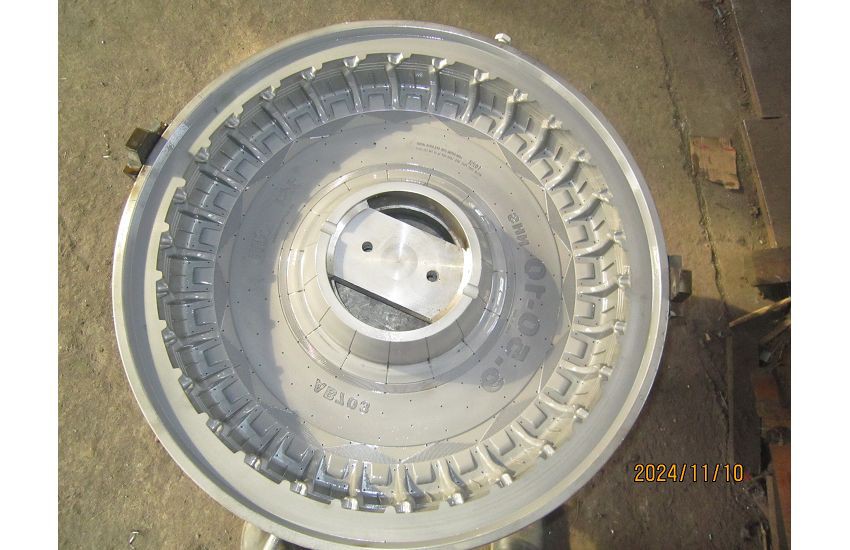

Retread Molds
Used for retreading worn tires. They typically have a different design than original tire molds, allowing for the application of a new tread layer over the existing tire carcass.
Tread Pattern Molds
Tailored to create specific tread patterns that can enhance the tire's grip, reduce road noise, or improve fuel efficiency. Custom tread designs can be created to cater to specific vehicle specifications or usage conditions.
Tongue and Groove Molds
These molds feature grooves and interlocking sections that help ensure proper alignment and sealing of tire components during the curing process.
Steel
Steel is the most commonly used material in truck tire molds because of its high hardness, strong wear resistance and excellent corrosion resistance. Steel molds are suitable for high-intensity, high-temperature and frequent use environments, and can withstand the high pressure and high temperature conditions during tire production.
Aluminum alloy
Aluminum alloy molds are light and have good thermal conductivity. However, aluminum alloys have low hardness and are prone to deformation and wear, so they are not suitable for high-frequency use. They are usually used in low-intensity or low-temperature tire production.
Titanium alloy
Titanium alloy molds have high strength, high hardness and good high-temperature durability, and are lightweight and have high molding precision.
Plastic
Some truck tire molds are made of plastic materials, mainly for low-intensity, low-temperature and infrequent use.
Composite materials
These materials combine the advantages of multiple materials to provide better performance and durability, suitable for specific production needs.
Customized solutions for Truck Tire Mold
Design Tailoring
● Specific Load Requirements: Customize molds to accommodate tires designed for specific load capacities reflecting the truck's intended use (e.g., heavy haul, long-distance transport).
● Tread Patterns: Develop unique tread patterns tailored to specific road conditions, such as off-road, wet, or snowy environments, to optimize traction and reduce wear.
● Sidewall Stiffness: Design molds that allow for variation in sidewall stiffness, improving the tire's handling characteristics.
● Personalized Patterns: Design specialized tread patterns and sidewall designs to cater to specific performance needs or branding requirements.
Material Selection
High-Performance Materials: Utilize advanced materials for the molds that can withstand high temperatures and pressures during the curing process, ensuring durability and a longer lifespan of the molds.
Modular Mold Systems
● Modular Design: Develop molds with interchangeable segments that allow manufacturers to easily switch between different tire sizes or designs without needing complete new molds.
● Multi-Stage Molding: Incorporate designs that support multi-stage molding processes for enhanced complex tire designs, allowing for the inclusion of features like bead wire and multiple rubber layers.
Cooling and Heating Systems
● Optimized Cooling Channels: Design molds with advanced cooling systems to ensure uniform temperature control, reducing cycle times and improving mold lifespan.
● Temperature Control Systems: Integrate state-of-the-art temperature control technologies for better management during the vulcanization process.
Surface treatment of Truck Tire Mold
Coating Techniques
● Hard Coatings: Applying hard coatings such as chromium plating, nitriding, or carbide coatings can enhance the wear resistance of molds.
● Ceramic Coatings: These can provide excellent thermal insulation and wear resistance, helping to extend mold life.
● Polymer Coatings: Non-stick polymer coatings may improve release properties, preventing the tire rubber from sticking to the mold.
Surface Finishing
● Polishing: A smooth surface finish reduces friction and helps with the release of the tire from the mold.
● Micro-finishing: This process improves surface smoothness to enhance aesthetic quality and reduce defects in the tire.
Surface Texturing
Texturing patterns can be applied to the mold surface to create specific tread designs and improve the grip of the rubber during curing. Texturing also helps in controlling the rubber flow during mold filling.
Oxidation Resistance
Treatment can include methods to improve oxidation resistance, which is essential for maintaining mold integrity during high-temperature tire manufacturing processes.
Frequently Asked Questions
We're professional truck tire mold manufacturers and suppliers in China, specialized in providing high quality products and service. We warmly welcome you to buy high-grade truck tire mold made in China here from our factory.
truck tire mold for firefighting trucks, truck tire mold for emergency vehicles, truck tire mold for motorhomesPopular Products


