


In the dynamic world of motocross, the pursuit of enhanced performance and efficiency is unending. One often overlooked yet crucial component in this quest is the motocross tire mold. As a leading supplier of Motorcycle Tyre Mold, Electric Motorcycle Tire Mold, and Motocross Tire Mold, we understand the significance of innovative design strategies for these molds to improve fuel efficiency. In this blog, we will explore various design approaches that can make a substantial difference in the performance of motocross tires and ultimately contribute to better fuel economy.
Understanding the Link between Tire Design and Fuel Efficiency
Before delving into the design strategies for motocross tire molds, it is essential to understand how tire design influences fuel efficiency. The primary factors include rolling resistance, tread pattern, and tire weight. Rolling resistance is the force that resists the motion of the tire as it rolls on the road. A lower rolling resistance means less energy is wasted in overcoming this force, resulting in better fuel efficiency. The tread pattern also plays a crucial role. A well-designed tread pattern can reduce rolling resistance while maintaining good traction. Additionally, a lighter tire requires less energy to move, which also contributes to improved fuel economy.
Optimizing Tread Patterns
One of the most effective ways to improve fuel efficiency through tire mold design is by optimizing the tread pattern. A tread pattern that minimizes contact area with the road surface can significantly reduce rolling resistance. For instance, a tread pattern with fewer grooves and a more continuous surface can reduce the deformation of the tire as it rolls, resulting in lower energy losses. However, it is important to strike a balance between reducing rolling resistance and maintaining adequate traction. A tread pattern that is too smooth may compromise traction, especially in wet or off-road conditions.
Another approach is to use a variable tread pattern. This means that the tread pattern changes across the width of the tire. For example, the center of the tire can have a smooth tread pattern to reduce rolling resistance during straight-line driving, while the shoulders of the tire can have a more aggressive tread pattern to provide better traction during cornering. This design allows the tire to perform well in different driving conditions while still achieving good fuel efficiency.
Reducing Tire Weight
Reducing the weight of the tire is another important strategy for improving fuel efficiency. This can be achieved through the use of lightweight materials in the tire mold design. For example, advanced composite materials can be used to replace traditional rubber compounds, resulting in a lighter tire without sacrificing strength and durability. Additionally, the design of the tire mold can be optimized to reduce the amount of material used in the tire construction. This can be done by using thinner sidewalls and reducing the thickness of the tread in areas where it is not necessary.

Another way to reduce tire weight is by using a more efficient manufacturing process. For example, precision molding techniques can be used to ensure that the tire is produced with the exact amount of material required, minimizing waste. Additionally, the use of automated manufacturing processes can reduce the labor and energy required to produce the tire, further contributing to cost savings and improved fuel efficiency.
Improving Tire Compounding
The compound used in the tire construction also has a significant impact on fuel efficiency. A tire compound that has a low hysteresis loss can reduce rolling resistance and improve fuel economy. Hysteresis loss is the energy that is dissipated as heat when the tire is deformed. A tire compound with a low hysteresis loss means that less energy is wasted as heat, resulting in better fuel efficiency.

To achieve a low hysteresis loss, advanced polymer materials can be used in the tire compound. These materials have a high resilience and can recover their shape quickly after being deformed, reducing the energy losses. Additionally, the use of additives such as silica can improve the wet traction of the tire while still maintaining a low rolling resistance.

Enhancing Tire Shape and Structure
The shape and structure of the tire can also affect fuel efficiency. A tire with a rounder cross-section can reduce rolling resistance by minimizing the contact area with the road surface. Additionally, a tire with a stiffer sidewall can reduce the deformation of the tire during cornering, resulting in better handling and lower energy losses.
The design of the tire mold can be optimized to produce tires with the desired shape and structure. For example, the mold can be designed to have a specific curvature and profile to ensure that the tire has a rounder cross-section. Additionally, the mold can be designed to reinforce the sidewall of the tire, making it stiffer and more resistant to deformation.
Incorporating Aerodynamic Features
In addition to the traditional design factors, aerodynamic features can also be incorporated into the tire mold design to improve fuel efficiency. A tire with a smooth surface and a streamlined shape can reduce air resistance, resulting in lower energy losses. For example, the sidewall of the tire can be designed to have a smooth finish, and the tread pattern can be optimized to reduce the turbulence caused by the airflow around the tire.
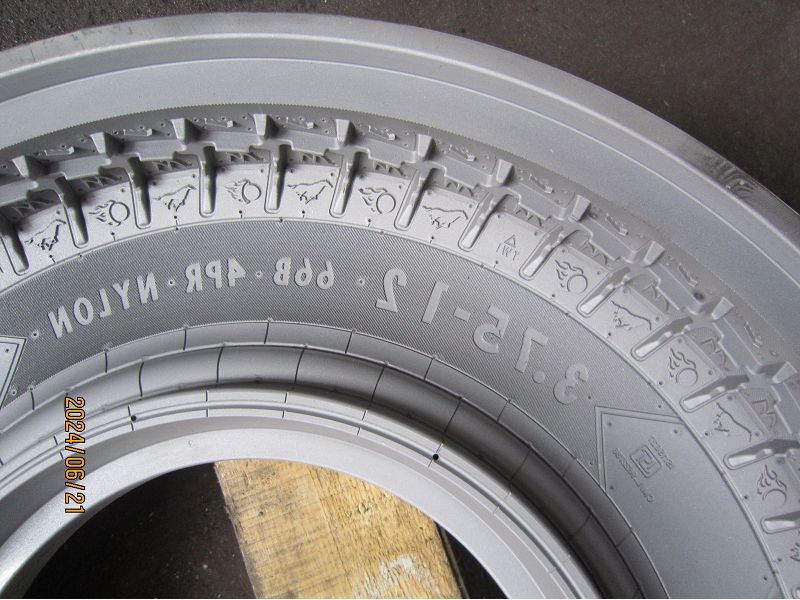
Another approach is to use a tire with a low-profile design. A low-profile tire has a shorter sidewall, which reduces the amount of air that is displaced as the tire rolls. This can result in a significant reduction in air resistance and improved fuel efficiency.
Conclusion
In conclusion, the design of motocross tire molds plays a crucial role in improving fuel efficiency. By optimizing the tread pattern, reducing tire weight, improving tire compounding, enhancing tire shape and structure, and incorporating aerodynamic features, we can produce tires that offer better performance and lower fuel consumption. As a leading supplier of Motorcycle Tyre Mold, Electric Motorcycle Tire Mold, and Motocross Tire Mold, we are committed to developing innovative design strategies that meet the evolving needs of the motocross industry.
If you are interested in learning more about our motocross tire molds or would like to discuss your specific requirements, please feel free to contact us. We look forward to working with you to develop high-quality tire molds that can help you achieve better fuel efficiency and performance.
References
- "Tire Design and Development" by Hans-Joachim Stopp
- "Fundamentals of Vehicle Dynamics" by Thomas D. Gillespie
- "Advanced Tire Technology" by John F. Dorfman


