


Hey there, fellow motorcycle enthusiasts and industry insiders! I'm a supplier of motorcycle tire molds, and today I want to dig into an interesting question: Can a motorcycle tire mold be used for tires with special rubber compounds?
First off, let's talk a bit about what special rubber compounds are. These aren't your run - of - the - mill rubbers. Special rubber compounds are formulated to offer enhanced performance in various aspects. For example, some are designed to provide better grip on wet roads, which is crucial for safety. Others might be made to be more heat - resistant, which is a big plus for high - speed riding. And there are also compounds that focus on durability, so the tires last longer.
Now, when it comes to using a motorcycle tire mold for these special rubber compounds, there are a few factors to consider.
Compatibility of the Mold Material
The material of the motorcycle tire mold plays a huge role. Most common motorcycle tire molds are made of steel or aluminum. Steel molds are known for their high strength and durability. They can withstand high pressures and temperatures during the tire manufacturing process. Aluminum molds, on the other hand, are lighter and have good heat transfer properties.
Special rubber compounds often require specific curing conditions. Some might need a higher curing temperature or a different pressure during the molding process. If the mold material can't handle these conditions, it can lead to problems. For example, if a mold isn't heat - resistant enough for a high - temperature - curing rubber compound, it could warp or deform. This would then affect the shape and quality of the tire being produced.
Surface Finish of the Mold
The surface finish of the mold is also super important. A smooth surface finish is usually preferred as it helps in easy demolding of the tire. But special rubber compounds might interact differently with the mold surface. Some compounds could stick more easily to the mold, which might require a different surface treatment.
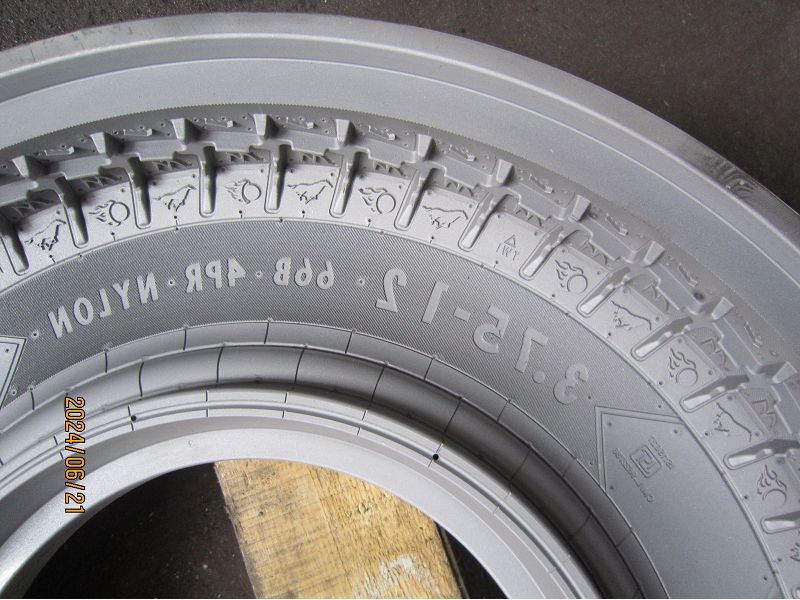

For instance, if a rubber compound has a high tackiness, the mold might need a special coating to prevent the tire from sticking. Without this coating, the tire could get damaged during the demolding process, leading to defects in the final product.
Design of the Mold
The design of the motorcycle tire mold is tailored to create specific tire tread patterns and shapes. Special rubber compounds might have different flow characteristics compared to regular compounds. If the mold design doesn't account for these differences, the rubber might not flow evenly inside the mold. This could result in uneven tread wear or other performance issues in the tire.
Let's say we have a Motocross Tire Mold. Motocross tires need to have deep and aggressive treads for better traction on off - road terrains. If a special rubber compound is used that has a slower flow rate, the mold design might need to be adjusted to ensure that the rubber fills all the nooks and crannies of the tread pattern properly.
Cost Considerations
Using a motorcycle tire mold for special rubber compounds can also have cost implications. If the mold needs to be modified to accommodate the special compound, it can add to the production cost. This includes the cost of any surface treatments, changes in the curing process, or even the cost of replacing the mold if it can't be adapted.
However, if the demand for tires with special rubber compounds is high, the investment in modifying the mold might be worth it. For example, Motorcycle Tyre Mold used for producing high - performance street tires with special grip - enhancing compounds could potentially bring in more revenue in the long run.
Case Studies
Let's look at a couple of case studies to better understand this.
Case 1: A manufacturer wanted to produce electric motorcycle tires with a special rubber compound that was more energy - efficient. They used an existing Electric Motorcycle Tire Mold. At first, they faced issues with the rubber not curing evenly. After some analysis, they found that the heat transfer in the mold wasn't sufficient for the new compound. They had to modify the mold by adding better heat - conducting channels. Once this was done, the production of high - quality electric motorcycle tires with the special compound became possible.
Case 2: Another company tried to use a standard motorcycle tire mold for a special rubber compound designed for extreme cold weather. The compound was very viscous at normal temperatures, and it didn't flow well into the mold. They had to heat the mold to a slightly higher temperature and adjust the injection pressure. But even then, the surface finish of the mold caused the tire to stick during demolding. They ended up applying a non - stick coating to the mold, which solved the problem.
Conclusion
So, can a motorcycle tire mold be used for tires with special rubber compounds? The answer is yes, but it's not always straightforward. It requires careful consideration of the mold material, surface finish, design, and cost. With the right adjustments and modifications, it's definitely possible to use existing molds for special rubber compounds.
If you're in the tire manufacturing business and are looking to produce tires with special rubber compounds, I'd love to have a chat with you. We can discuss how our motorcycle tire molds can be adapted to meet your specific needs. Whether it's a Motocross Tire Mold, Motorcycle Tyre Mold, or Electric Motorcycle Tire Mold, we have the expertise to help you get the best results. Reach out to start a conversation about your procurement needs and let's work together to create high - quality tires!
References
- Smith, J. (2020). Tire Manufacturing Processes. Tire Industry Journal.
- Johnson, A. (2019). Special Rubber Compounds for Motorcycle Tires. Rubber Technology Review.


